Museums, Repatriation, and the Digital Footprint
Who owns the object, the story, and the data?
- Key Concepts
- Clayton Dumont; Hēmi Whaanga and Paora Mato; Indigenous nations and source communities
- Context
- Colonial museums to the digital present
- Method / Framework
- Museum studies, repatriation law, and Indigenous data sovereignty
- Core Problem
- Who owns and interprets Indigenous objects, stories, and data — and what would a just archive look like?
I. The Executive Dispatch (TL;DR)
- Museums are not neutral. Their collections were built through colonial acquisition, and their claims to objectivity have often masked that history.
- Repatriation is about authority, not only property. Returning an object can restore relationships, protocols, and community control.
- Digital archives extend the colonial archive. Digitisation can increase access, but it can also reproduce extraction and ownership.
- Data sovereignty is a sovereignty issue. Indigenous nations have the right to control their data, cultural materials, and digital records.
- The one-line exam takeaway: the fight over museums is a fight over who gets to tell the story — and who gets to decide what happens next.
II. Historical & Intellectual Context (“The Backstory”)
The colonial museum
Museums emerged in Europe alongside empire. They collected objects from colonised peoples, classified them, and displayed them as evidence of human development. Indigenous objects were often treated as “artifacts” rather than as living cultural materials.
The museum’s claim to objectivity was part of its authority. Curators presented themselves as neutral experts who could interpret objects for the public. But the collections were built through conquest, trade, theft, and unequal relationships.
Repatriation
Repatriation is the return of cultural materials, human remains, and objects to Indigenous nations and communities. It is not only a legal process; it is a political and ethical one. Repatriation can restore relationships, allow ceremonies to take place, and return authority to source communities.
Repatriation is often contested. Museums argue that they are custodians of world heritage; source communities argue that they have the right to determine the fate of their own materials. The conflict is about ownership, authority, and the meaning of the object.
The digital footprint
Hēmi Whaanga and Paora Mato’s “The Indigenous Digital Footprint” examines how Indigenous materials are digitised, circulated, and controlled online. Digital archives can increase access, but they can also reproduce colonial patterns of ownership and extraction.
Data sovereignty asks who controls the digital record. It includes questions of consent, access, storage, and use. It also includes the right to restrict access to culturally sensitive materials.
III. Structural & Formal Architecture
Object, story, data
The museum debate has three layers:
- The object: who owns it, where it should be, and how it should be cared for.
- The story: who interprets it, what context is provided, and whose voice is heard.
- The data: who controls the digital record, who can access it, and how it is used.
Repatriation addresses the first layer, but it also affects the second and third. A returned object can be recontextualised; a digital record can be restricted or shared on community terms.
The critique of objectivity
Dumont’s “‘Objectivity’ and Repatriation: Pulling on the Colonisers’ Tale” challenges the museum’s claim to neutral expertise. Objectivity is not a view from nowhere; it is a perspective shaped by institutional power. The museum’s authority to interpret is part of what must be decolonised.
Data sovereignty
Data sovereignty is the right of Indigenous peoples to control the collection, ownership, access, and use of their data. It applies to research data, cultural materials, language recordings, and digital archives. It is grounded in Indigenous jurisdiction and relationship, not only in individual privacy.
IV. The Chronicle: Three Arguments
1. Dumont: objectivity is a colonial story
Dumont argues that museums’ claims to objectivity have helped justify colonial possession. The museum presents itself as a neutral custodian, but its authority rests on the dispossession of Indigenous peoples. Repatriation challenges that authority.
2. Whaanga and Mato: the digital footprint
Whaanga and Mato examine how Indigenous materials circulate online. Digitisation can make collections accessible, but it can also strip them of context and community control. Data sovereignty offers a framework for resisting extraction.
3. The Haida totem pole
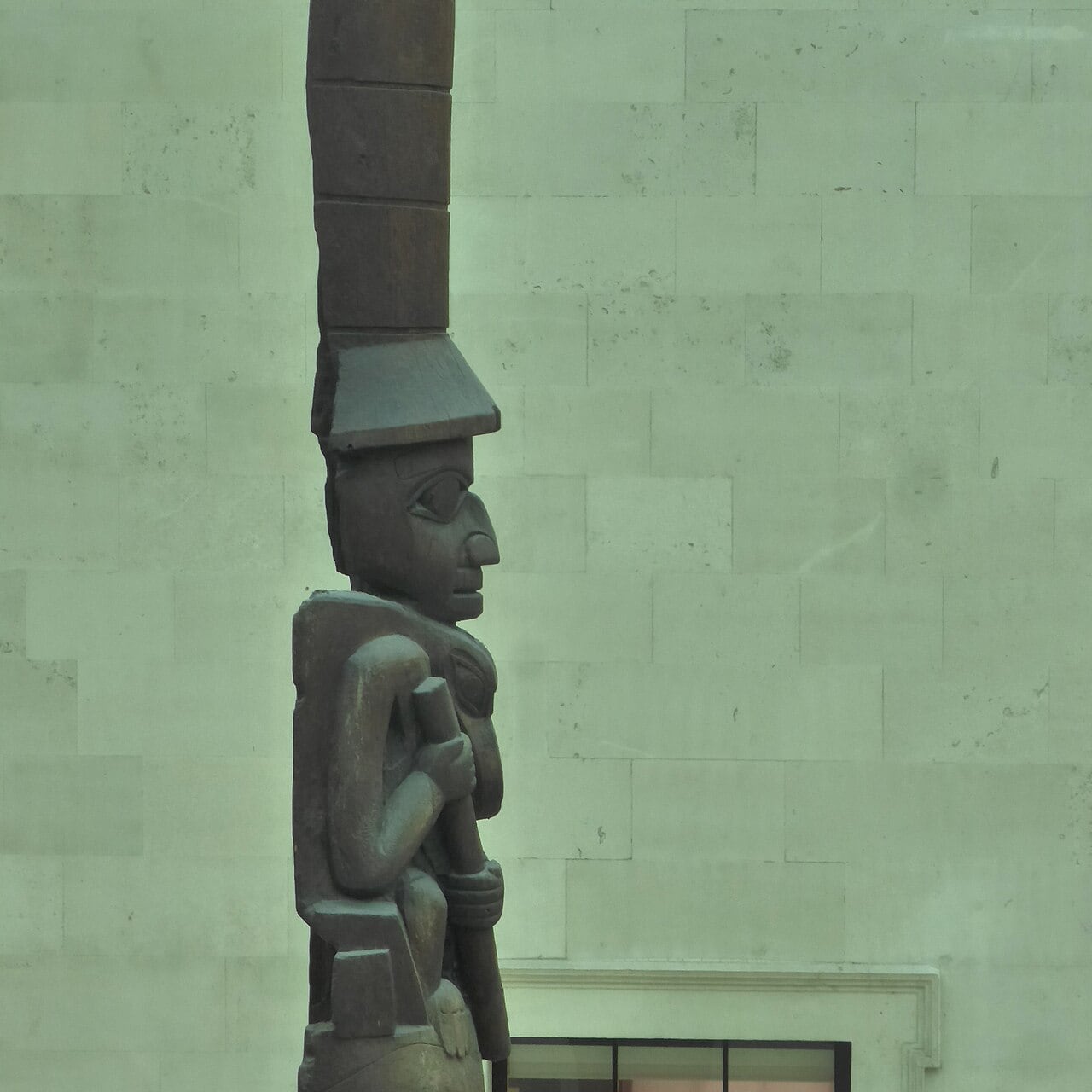
The Haida totem pole in the British Museum is a concrete example. It is displayed as an object of world culture, but its presence in London is also a trace of colonial acquisition. Repatriation debates ask not only whether it should return, but who has the authority to interpret it.
V. The Editorial Board: Deep Thematic & Critical Analysis
The museum as a colonial institution. Museums are not only buildings; they are systems of classification, display, and authority. Decolonising a museum requires more than changing labels. It requires changing who has power.
Repatriation and relationship. Repatriation is not only about returning objects. It is about restoring relationships between people, ancestors, and places. It can be a form of healing and a political act.
Access and ownership. Digital access is not the same as ownership. A community may want its materials to be visible, but it may also want to control how they are used. Data sovereignty holds both possibilities together.
Futurity. Museums and archives are often oriented toward the past. Indigenous futurity asks what these institutions would look like if they were accountable to the next generation.
VI. Exam & Essay Sparkplugs
1. “Museums cannot be decolonised without repatriation.” Discuss.
Winning Thesis Blueprint. Repatriation challenges the museum’s claim to ownership and interpretive authority, but decolonisation also requires changes in governance, funding, curation, and access. The essay should distinguish symbolic reform from structural transfer of power.
Supporting points.
- Dumont’s critique of objectivity.
- The politics of provenance and display.
- Digital data sovereignty as another front.
2. “Digitisation makes Indigenous materials more accessible, so it is decolonising.” How far do you agree?
Winning Thesis Blueprint. Digitisation can increase access, but it can also extract knowledge and reproduce colonial ownership. The essay should distinguish access from control and analyze who sets the terms.
Supporting points.
- The benefits and risks of digital archives.
- Data sovereignty and cultural protocols.
- The difference between visibility and authority.
3. “The museum is a site of Indigenous futurity.” Discuss.
Winning Thesis Blueprint. Museums are often oriented toward the past, but they can become sites of Indigenous futurity when source communities control interpretation, display, and access. The essay should connect repatriation and data sovereignty to the imagination of alternative futures.
Supporting points.
- Co-curation and community authority.
- Repatriation as relationship-building.
- Digital archives as sites of future-making.
Further Reading
Clayton Dumont, “‘Objectivity’ and Repatriation: Pulling on the Colonisers’ Tale”; Hēmi Whaanga and Paora Mato, “The Indigenous Digital Footprint”; course materials on museums, repatriation, and data sovereignty.